

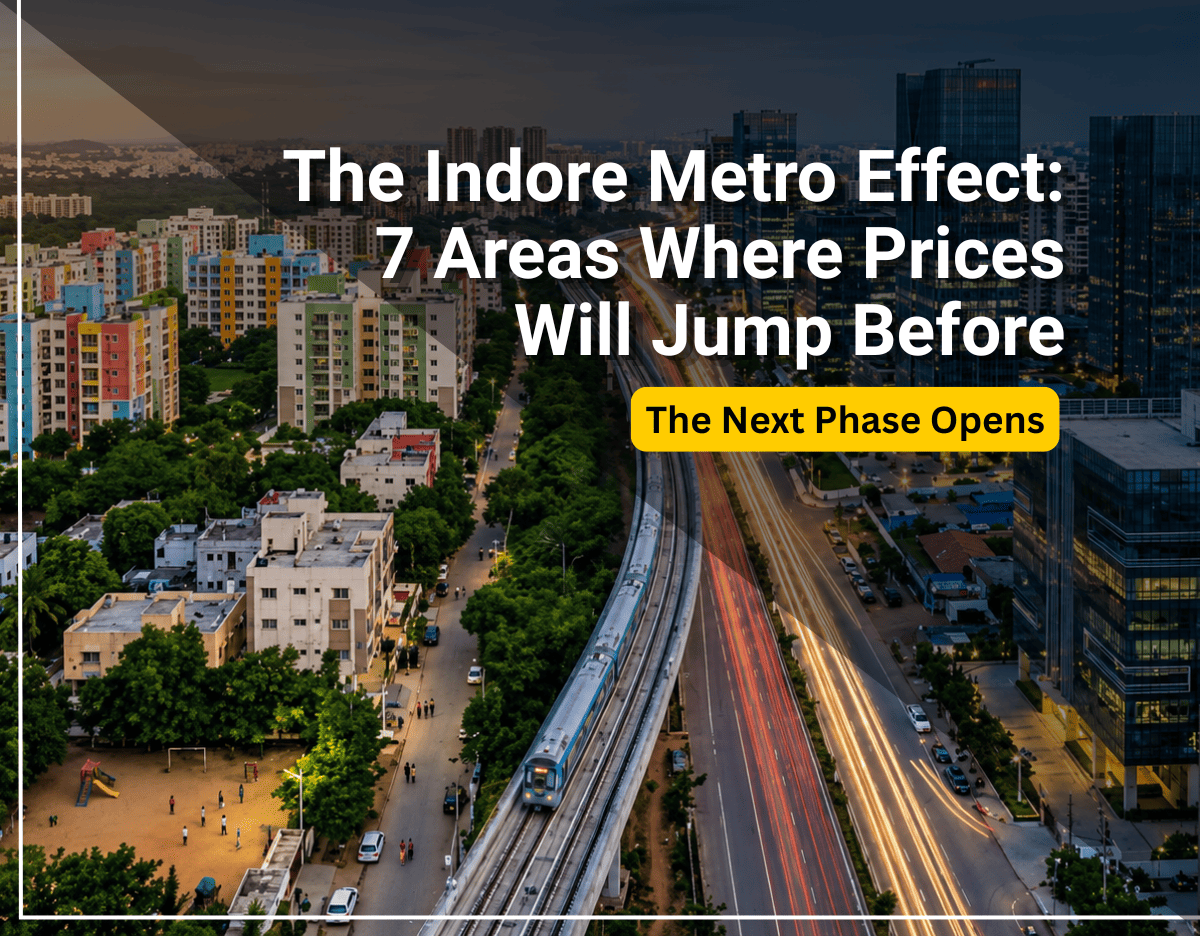
Metro lines change cities quietly and then all at once. Indore entered its metro era on 31 May 2025, when the priority corridor opened, and the city is now awaiting the extended stretch to begin commercial operations. History from Pune, Ahmedabad, and Nagpur shows that property prices near stations tend to move before trains do, not after. This article maps the seven Indore areas most likely to see that movement, based on the official route, current market data, and the construction status reported through mid 2026.
The Metro Picture in Mid 2026
The Yellow Line of the Indore Metro is planned as a roughly 31.5-kilometre ring. The operational section currently runs five stations from Gandhi Nagar to Super Corridor Station 03. The next stretch, extending toward Radisson Square, has completed trial runs and safety inspections but has missed multiple launch deadlines, with reports in June 2026 counting the sixth delay. Industry observers had already noted 15 to 20 percent appreciation along the corridor in anticipation of operations, and the delayed section is where the next wave of that anticipation is concentrated.
The 7 Areas to Watch
1. Super Corridor Belt. The only belt with running trains today. With TCS, Infosys, planned public projects, and five live stations, it combines proof with a pipeline. Prices have moved, but the corridor’s planned Transit Oriented Development discussions suggest the story is not finished.
2. Gandhi Nagar. The depot end of the operational line. Depot locations often begin as unglamorous edges and mature into dense residential pockets because connectivity arrives first and amenities follow. Entry prices here remain lower than the corridor’s prime schemes.
3. MR10 and ISBT Zone. The upcoming stretch passes through this belt, which already benefits from the interstate bus terminal and wide road infrastructure. Logistics, hospitality, and rental housing demand converge here, and station proximity will compound it.
4. Vijay Nagar Square. The city’s busiest commercial node is set to get its own station on the extended section. Commercial property near confirmed station points in other Indian cities has consistently outperformed the wider market, and shops and offices within walking distance of the square deserve close attention.
5. Radisson Square and the Ring Road Belt. As the announced terminal point of the next operational phase, this junction carries the strongest event-based trigger. The day trains reach here, every listing within a kilometre gets repriced in conversations, and many buyers scanning plots for sale in indore have already shifted their search toward this belt in anticipation.
6. The AB Road Bypass Stretch. The bypass side connects naturally to the metro’s eastern arc and has become one of the most active plotted development belts in the city, with 99acres listing average rates around 5,550 rupees per square foot in mid 2026. Township activity near Phoenix Citadel has accelerated, and several of the residential plots on ab road indore now market metro accessibility as a headline feature rather than a footnote, which tells you where developers believe the demand is heading.
7. Palasia and Bengali Square Arc. These fall on the later segments of the ring, which makes them the patient investor’s pick. Prices here already reflect central location value, but station confirmation typically adds a second layer of appreciation that current rates do not yet include. Square Yards data pegs Bengali Square around 5,155 rupees per square foot as of March 2026, modest for its centrality.
How to Play the Metro Effect Wisely
Three rules protect buyers in metro-driven markets. First, distance is everything. Research across Indian metros repeatedly shows the strongest appreciation within 500 to 800 metres of a station, and the effect fades fast beyond that. Second, buy on confirmed alignment, not proposals. Indore’s own master plan history shows how long proposed corridors can take, and only the Yellow Line is under actual execution today. Third, respect the delay risk. Six missed deadlines on the current extension are a reminder that timelines slip, so your finances should never depend on an opening date.
The Window Is the Point
The reason this article exists is simple. Once the extended corridor opens, the anticipation discount disappears. The areas listed above are in the narrow window between confirmed infrastructure and operational infrastructure, which is historically where the sharpest price movement happens. Buyers who act with verified documents, station distance checks, and realistic timelines will look back at this window the way early Super Corridor buyers look back at 2018. The metro will open when it opens. The opportunity exists precisely because it has not yet.
